
The housing crisis and the climate crisis are often regarded as separate problems. But one powerful solution addresses both: building more homes where people already live.
This type of development is called infill housing. It places new and modified homes within existing neighborhoods and developed areas. The contrast to this is sprawl, a familiar practice in much of California that includes low-density residential housing, often on rural, natural, and agricultural lands. Sprawl fragments habitat, severs wildlife corridors, and disrupts the carbon sequestration and flood-prevention benefits of healthy ecosystems.
By choosing infill housing instead of sprawl, we can address both our housing shortage and climate challenge to create healthier communities.
Protecting the land we can't afford to lose
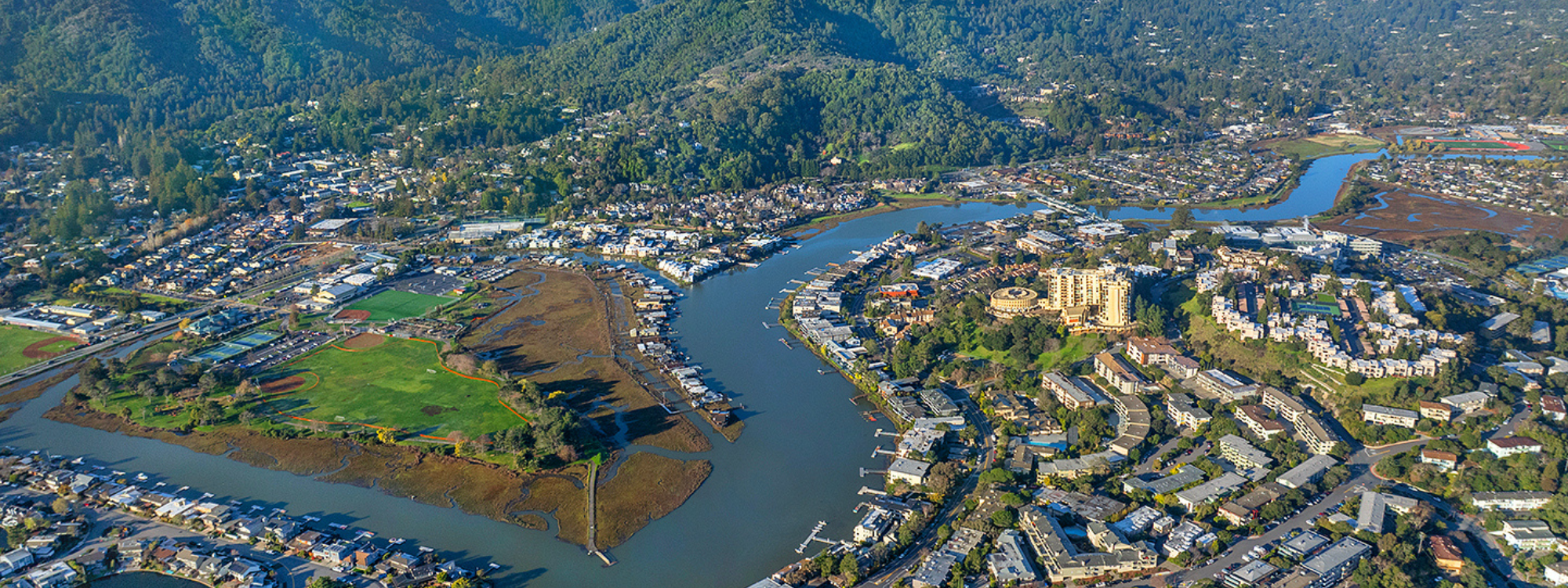
Marin’s environmental ethos is evident in our abundant open spaces. Over 85% of Marin County is restricted from development, consisting of federal parks, agricultural land, water district lands, and open space preserves. However, we seem to limit our value of open space to only our County boundaries.
Because we have simultaneously limited affordable and moderate-density homes in Marin, our community members have been forced to move elsewhere in the region and commute in for work. The direct result is that we are disrupting more lands by creating sprawl further out in Sonoma, the East Bay, and beyond. Since 1950, outer-metro locations like Santa Rosa have increased in physical size by over 300%, mostly through low-density development.
When we build inward instead of outward, we reduce disruption to the soils, trees, and plant communities. These healthier landscapes sequester carbon, improve water quality and quantity, and offer connected habitat to wildlife. The good news is that we have substantial options within already developed footprints to build the housing we need without disrupting our beloved open space.
The more housing density we build now, the more land we can preserve for our future.
Reducing our emissions
Transportation accounts for the largest share of greenhouse gas emissions in Marin County. 64% of Marin’s workforce commutes from outside the county due to its high cost of living and age distribution.

When homes are built closer to jobs, transit, and services, people drive less. That means fewer and shorter car trips—one of the most effective strategies California can use to address climate change. In fact, building affordable housing is one of the most effective strategies for reducing carbon emissions, far more effective than transitioning to EVs.

Less driving also improves our notorious Bay Area traffic and reduces wear on roads and bridges, so that local government budgets can be allocated to needed adaptation investments. Further, density creates the demand that makes buses, trains, and public transit economically viable. Centralized and denser housing is what makes public transit actually work.The emissions benefits are not limited to transportation. Newer units also tend to be more compact than suburban single-family homes, which require less energy and use less water.
Connecting our community
Building new homes in existing communities puts families closer to jobs, schools, parks, and shopping, giving more Californians access to vibrant, connected communities. When a new building is nestled amongst a storefront or café, it generates foot traffic that supports local businesses, activates streets, and makes walking and biking safer and more enjoyable options.
Walkability also rebuilds the kind of social connections that keep communities healthy and resilient in the face of climate change. Neighbors who walk the same streets, share the same corner store, and know each other by name are more likely to support one another when climate impacts occur.
All Californians should have the opportunity to live in healthy communities and enjoy the natural lands and open spaces that make this area unique.
Creating a greater variety of homes in connected communities can help increase affordability, address climate change, and improve quality of life for Californians. That is the future we want to build in Marin.
Jenny Silva is the Executive Director at Call Marin Home and Member of the Executive Committee of the Marin Group of the Sierra Club SF Bay Chapter.
Jessie Rountree is the Marin Resilience Manager at Greenbelt Alliance.
Header Photo: Scott Hess