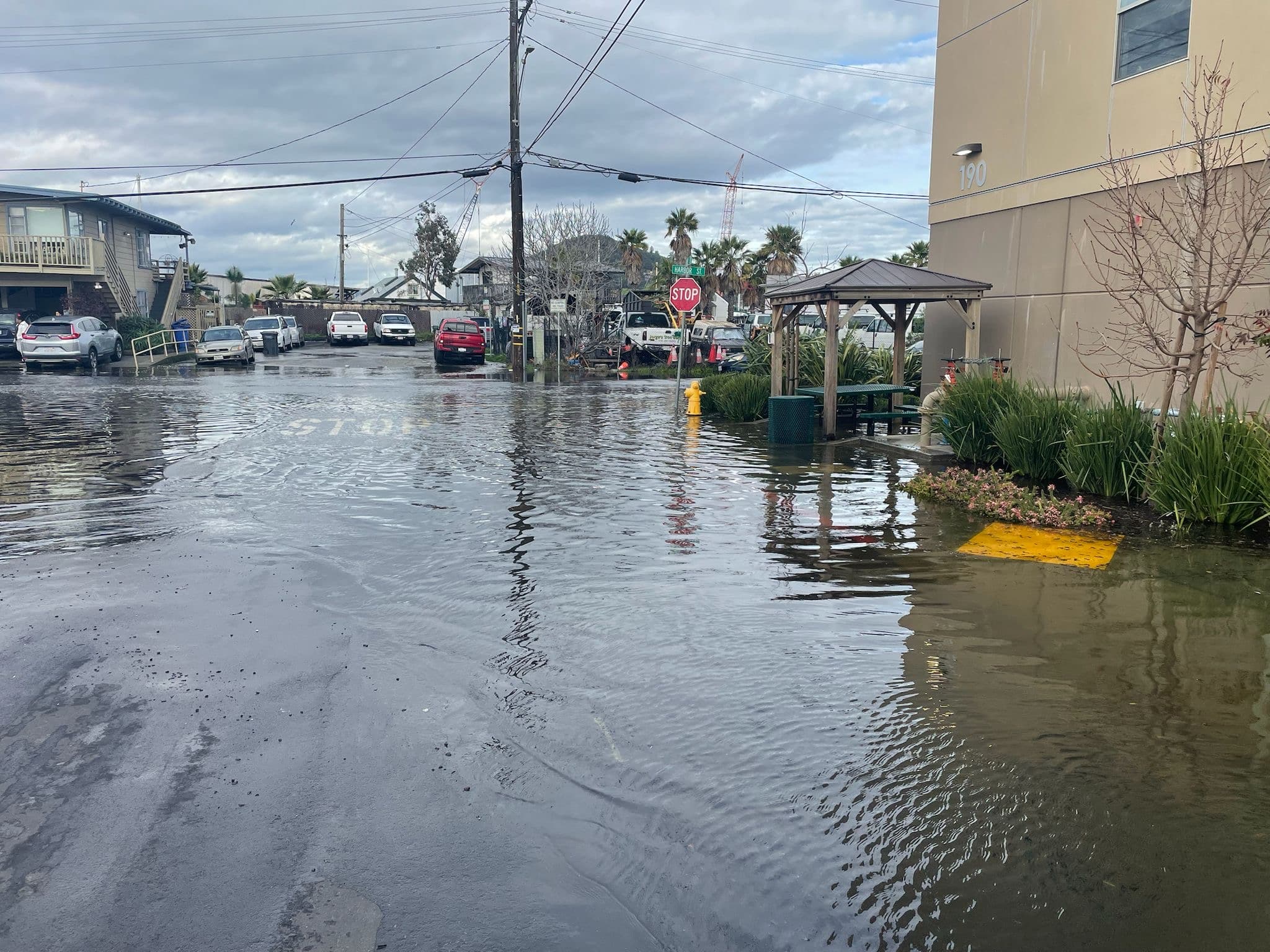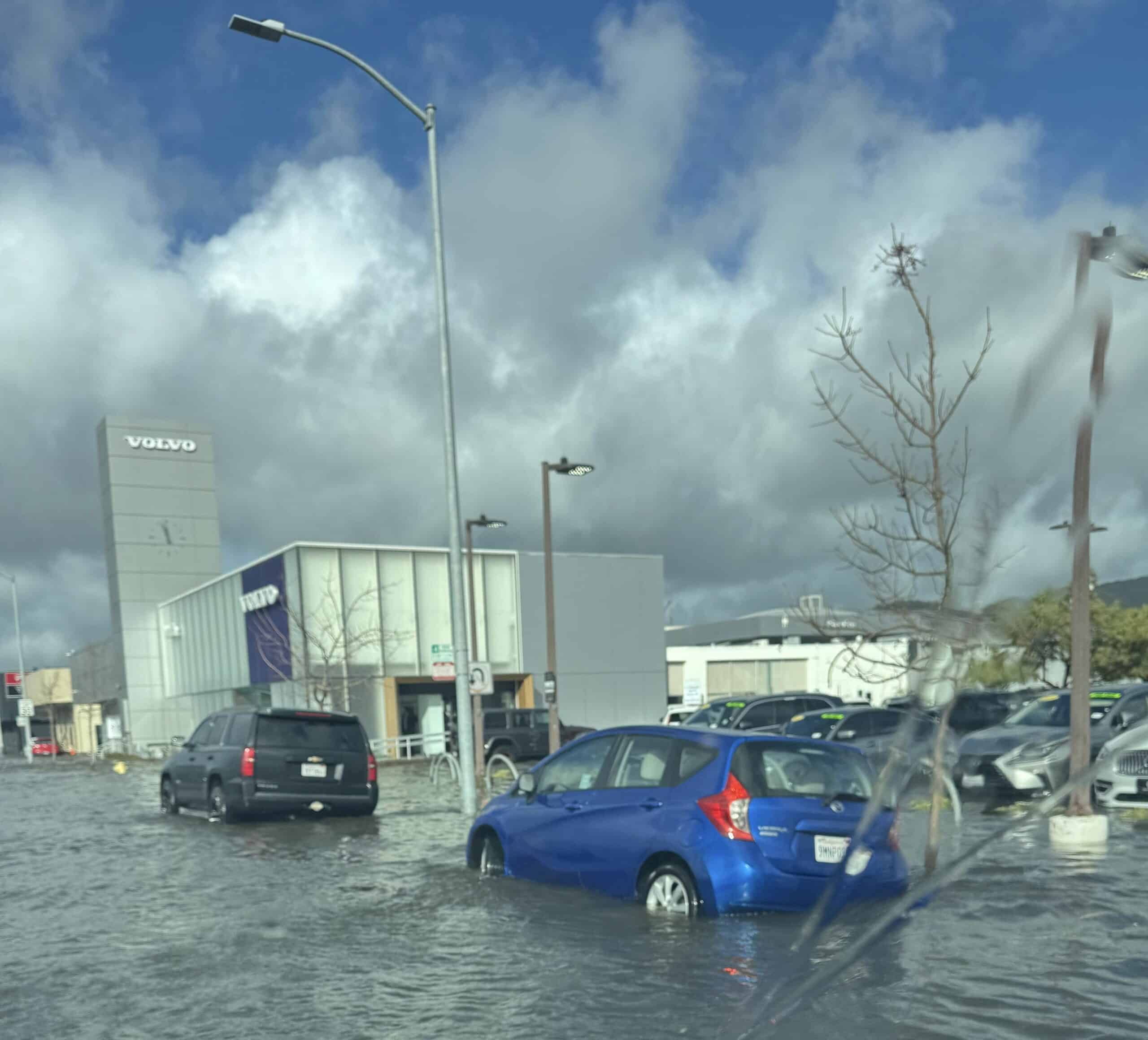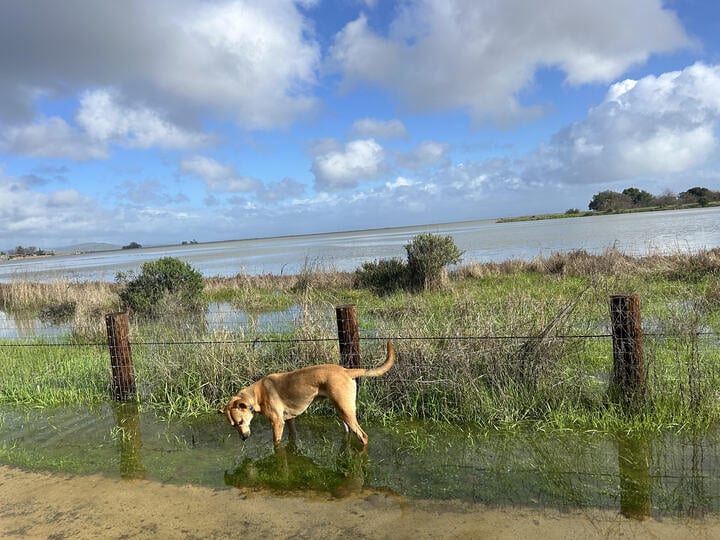
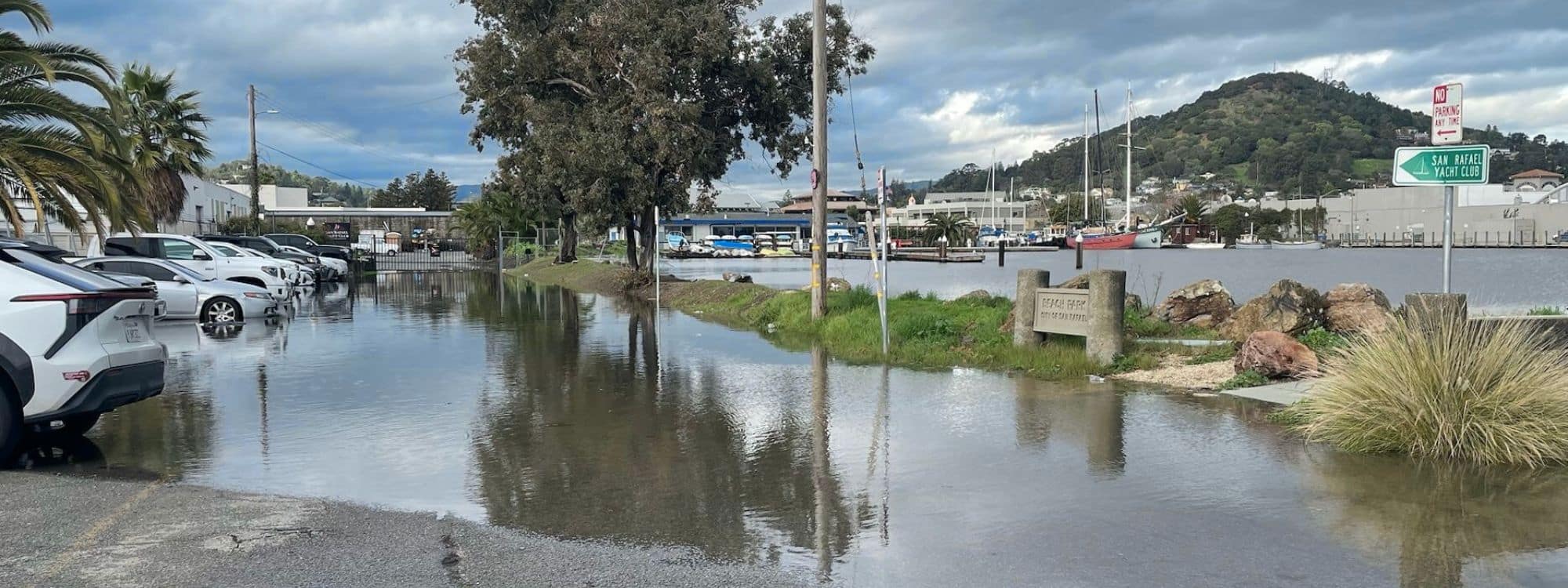

In the first days of January, hundreds of homes and businesses across Marin County experienced historic levels of flooding as the natural phenomenon of King Tides combined with heavy rainfall.
The water damaged properties in Sausalito, Mill Valley, Corte Madera, and San Rafael; threatened critical infrastructure; and even knocked out 911 service when an AT&T communications hub flooded in San Rafael. Highway 101 near Lucky Drive became entirely submerged and remained paralyzed for hours, with traffic reduced to a single lane in both directions. The transportation disruptions rippled throughout the Bay Area, affecting residents and holiday travel.
“Flooding is not a future problem for the Canal; it is happening now,” wrote members of the San Rafael Canal Sea Level Rise Working group representatives in an open letter. “Families are dealing with flooded streets, blocked access, and unsafe living conditions. We need action that protects people today while planning for long-term solutions.” Read the full letter here.
The aftermath extends beyond the immediate inconvenience. Homes and businesses now face the threat of mold growth from water damage, and an increased risk of flooding may impact future insurance premiums.
A Preview of Tomorrow, Today
What we witnessed is not just a unique weather event, but rather a glimpse at our climate future. According to the Ocean Protection Council, sea levels are estimated to rise by two feet by mid-century, and could exceed seven feet by 2100 under high-emissions scenarios.
The danger compounds when sea level rise meets tidal activity and heavy rainfall. The flooding we witnessed in the early days of January resulted from the dangerous combination of high king tides and heavy rains, a pattern that will only intensify as our climate continues to change.
What feels exceptional today will become ordinary in the not-so-distant future. Marin County is especially vulnerable because of coastal and waterway proximity, development on or near flood-prone areas (such as wetlands), and sinking land. But the impacts of climate change do not affect all communities equally. For example, both Marin City and San Rafael’s Canal neighborhood face overlapping vulnerabilities that combine:
- Geography (including low-lying areas, sinking lands),
- Infrastructure (including limited evacuation routes and inadequate drainage), and
- Deep social inequities (including segregation of communities of color and a higher percentage of renters).
Solutions Within Reach
The good news? We know the solutions we need to minimize harm and help our communities adapt. Marin County is already implementing innovative solutions that demonstrate what resilient communities look like, thanks to community leadership. Some of the interventions are:
- Pumping stations & nature-based solutions: In Marin City, the leadership of Marin City Climate Resilience ensured solutions like a pumping system that successfully protected the community during the flooding, keeping water from inundating its low-lying areas. The Marin County Flood Control District is advancing this work with plans for a permanent pump station at Marin City Pond, designed to divert floodwaters to Richardson Bay and protect both the neighborhood and Highway 101.
- Community Innovation: The Canal neighborhood in San Rafael is planning its own future through Nuestro Canal, Nuestro Futuro, a resident-led adaptation plan grounded in lived experience, cultural knowledge, and long-term stewardship of place, led by Canal Alliance.
- Collaboration: The Marin Climate Justice Collaborative is helping weave together frontline leadership, local organizations, and public agencies to push for climate solutions that are not only effective but also equitable, ensuring Marin’s adaptation future is shaped by those who have the most at stake. This community-driven partnership is working to build climate resilience and equitable planning in Marin’s most vulnerable neighborhoods, including the Canal District in San Rafael and unincorporated Marin City, by educating, empowering, and activating residents to lead locally-rooted solutions to flooding, sea level rise, displacement, and other climate impacts.
- Policy Changes: Greenbelt Alliance’s Resilience Playbook outlines a series of studies, policies, and plans from across the Bay Area to support advocates and decision-makers in preparing our communities.
- Climate SMART housing: New housing in Marin is essential to meet the needs of community members displaced by flooding and to resolve our county-wide housing shortage. But where we build and how matters. Greenbelt Alliance advocates for Climate SMART—which stands for Sustainable, Mixed, Affordable, Resilient, Transit-Oriented—development to build with climate risks, like sea level rise, in mind.
Our Path Forward
This month’s flooding is a call to action. The water isn’t coming—it’s already here. But so too is our community of motivated residents. Together, through collaborative, community-driven solutions, we can build the resilient Marin County and broader Bay Area we all need.
Here’s how you can be part of the solution:
- Stay informed: Sign up for Greenbelt Alliance’s newsletter to learn about climate resilience efforts in your community. Sign up for AlertMarin to receive the County Government’s wireless emergency alerts.
- Support community-led initiatives: From Marin City’s flood protection, to the Multicultural Center of Marin, to Canal Alliance neighborhood’s vision plan, grassroots efforts need backing!
- Show up: Attend local public meetings about local adaptation plans; your voice matters in shaping solutions.
- Advocate: Contact your local representatives to support funding for climate adaptation infrastructure and equitable housing policies.
- Connect: Join Greenbelt Alliance and other organizations working to build a resilient Bay Area.
Want more information on any of the actions above? Please contact me, Jessie Rountree, Marin Resilience Manager, at jrountree@greenbelt.org.
Header photo: San Rafael Canal flooding in early January 2026. By John Rising/ Sea Level Rise Working Group.