
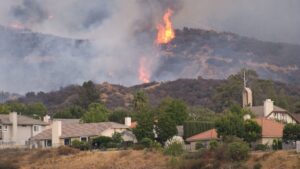
An Insurance Market Aflame
How Development in the Wildland-Urban Interface Has Worsened California’s Insurance and Affordability Crisis.

The challenge: Extreme wildfire events are growing more frequent every year under a changing climate. This new reality has left communities grappling with how to adapt—with many struggling to find a starting point and finding barriers to coordination efforts in local, regional, and state planning.
The solution: Greenbelt Alliance is working in fire-prone areas to facilitate policies and landscape-scale management strategies that prepare communities to withstand the impacts of future fires. Our work will equip these places with best practices in land management tactics as well as establish clear channels of collaboration so that residents and decision makers can have the resources needed to coexist with wildfires. Here’s how…
Greenbelt Alliance is sharing our research and expertise on land management techniques with planners, policymakers, partners, and residents in fire-risk locations. We are facilitating learning opportunities on topics like best practices for vegetation management and prescribed burning. We are also providing recommendations on how to preserve and steward our lands.
By offering these resources and expanding knowledge, at-risk communities will be able to use their open spaces as buffer zones, a tactic that will protect both people and places when the next fire strikes.
Greenbelt Alliance is promoting policies and leading campaigns at the local level that protect greenbelt lands. We are doing this by amplifying ballot initiatives that establish or renew policies that prevent growth on open spaces. Throughout the region, and at the state level, we are a leading advocate for how to use valuable lands as policy tools in order to go beyond prevention methods.
Leveraging our lands in this way will help prepare places to live with wildfire in more resilient ways.
Greenbelt Alliance is executing a community-driven planning process through our wildfire buffer pilot project. This project brings together cross-sector stakeholders to produce recommendations on a priority project where a greenbelt buffer will have the greatest impact on wildfire resilience and added co-benefits like improving access to nature.
The impact of our work will allow fire-risk communities to implement resilient best practices to co-exist with wildfire by protecting and stewarding greenbelt lands.
Explore our report “An Interwoven Greenbelt Buffer for Wildfire Risk Reduction” for the latest insights into the role of greenbelts in wildfire resilience.
Our team is building connections and sharing resources across sectors to bolster collaborative efforts and knowledge sharing around wildfire resilience.

How Development in the Wildland-Urban Interface Has Worsened California’s Insurance and Affordability Crisis.
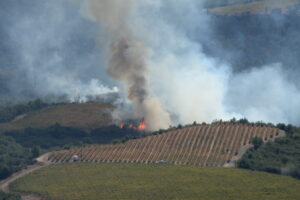
At a time when communities are reeling from the devastating impacts of destructive fires and losing insurance protections, a solution is needed now more than ever. Greenbelt Alliance offers a new, creative intervention for fire-prone areas statewide to adopt.

On May 31st, under the heat of a Sonoma County summer day, our incredible community of supporters gathered once again for one of Greenbelt Alliance’s most beloved annual traditions – our Sonoma Leadership Council Luncheon at the beautiful home of long-time supporter Linda Dodwell. Even with soaring temperatures, the spirit was high as friends reconnected,
Your go-to guide with key resources and a roadmap to community disaster resilience.
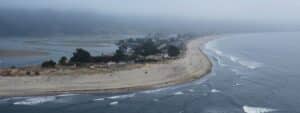
We are excited to see support for climate resilience in Stinson Beach, with residents passing Measures R and Q with a supermajority—over 80% and 92%, respectively.