
Update*: On December 11, the majority of the Newark City Council voted to approve the controversial Mowry Village development, agreeing to pave over one of the last remaining undeveloped stretches of Bay shoreline to put 226 homes in a flood zone!
Councilmember Jorgens abstained from voting, citing serious concerns over multiple false and misleading statements made by the developer—particularly regarding affordable housing, emergency access requirements, and site remediation. Vice Mayor Eve Marie Little delivered a resounding “no” vote, emphasizing her duty to represent the people of Newark—most of whom clearly did not support this project. She raised urgent concerns about public safety, environmental risk, and fiscal irresponsibility. Her comments were clear: approving this project ignores the will of the people and the evidence in front of them.
The disappointing vote came despite widespread public opposition, a petition signed by nearly 3,000 people urging the city to protect its wetlands, and a growing regional consensus around the importance of nature-based solutions.
This was more than just a local land use decision. It was a test of Newark’s commitment to resilience, and the City failed.
Our Fight For Newark
On October 23, we joined forces with our partner Citizens Committee to Complete the Refuge to make a powerful statement at Newark’s City Council meeting by delivering a petition with over 2,800 signatures to oppose the Mowry Village development.
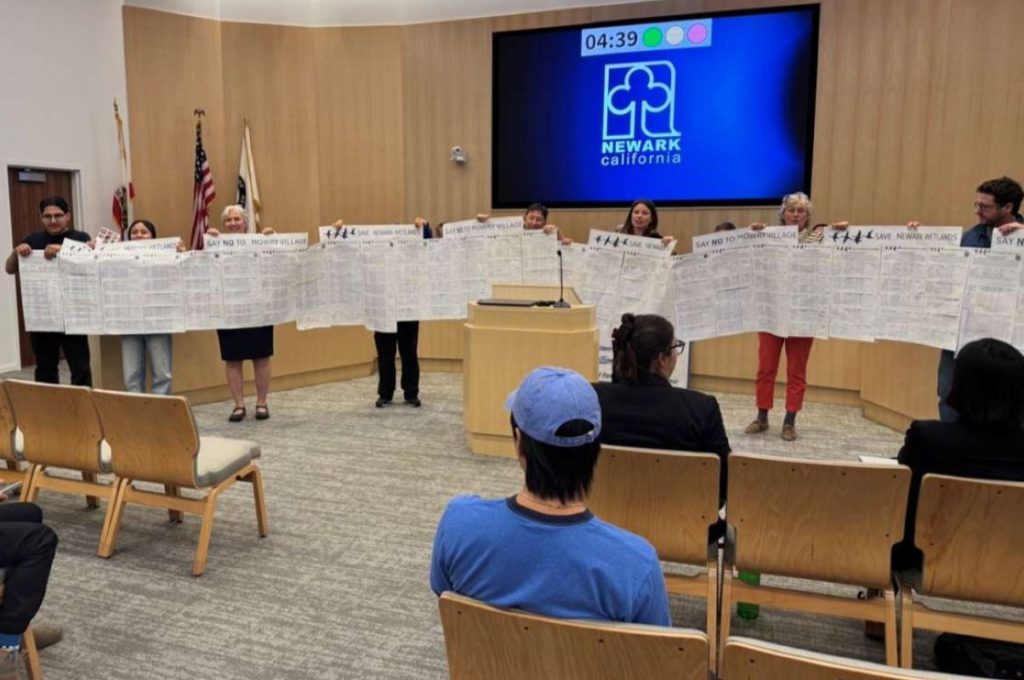
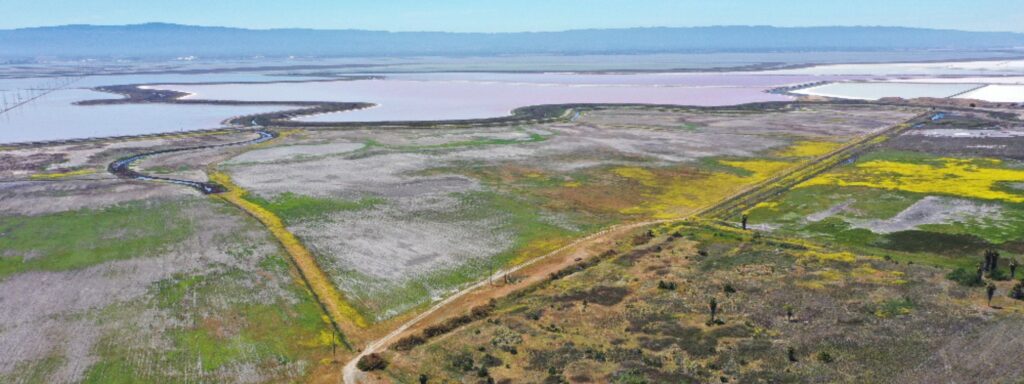
The proposed development would destroy one of the last remaining open spaces along the bay, land that is vital to our community and our climate future.
These wetlands are more than open space:
- They’re a nature-based solution to sea level rise, acting as natural buffers against flooding.
- They’re one of the most important habitats in the Bay Area, home to vulnerable and endemic species.
- They represent the last 10% of undeveloped Baylands—once it’s gone, it’s gone forever.
History Repeating Itself
This isn’t the first time Newark has chosen to build into the Bay rather than around it. From the proposed development of Area 4— also known as the Sanctuary West project—to previous expansions along the shoreline, Newark has a well-documented pattern of approving growth in areas known to be vulnerable to flooding, sea level rise, and groundwater emergence.
Time and again, residents, scientists, and regional partners have raised concerns, yet the City has pressed forward. The Mowry Village vote is the latest in a series of decisions that put short-term housing gains ahead of long-term resilience.
- Development pressure in Newark’s Area 4 is not new. Efforts to protect these baylands go back more than 30 years, with local environmental groups pushing to conserve and restore the landscape instead of paving over it for housing.
- In 2023, after years of advocacy, Newark removed Area 4 from its official Housing Element—a rare planning success showing that development in this bayland wasn’t necessary to meet housing targets and shouldn’t be considered a primary build site.
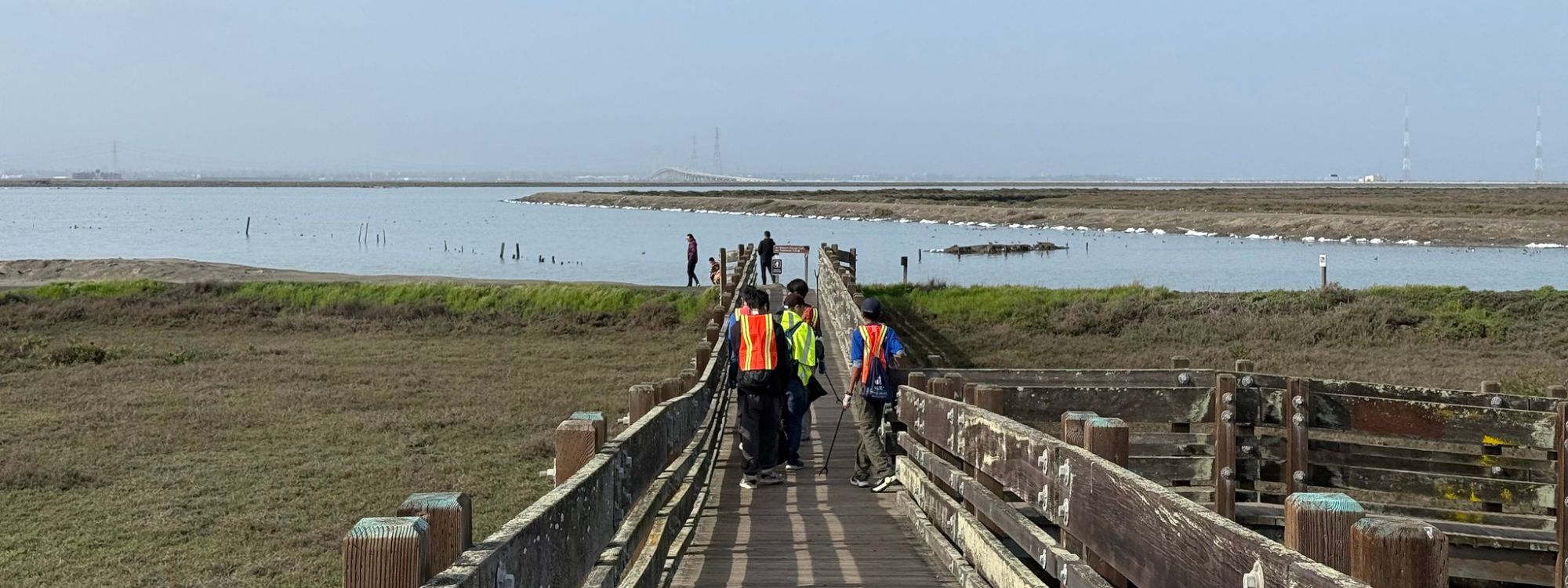
The Mowry Village proposed site is partially occupied by a junkyard and borders sensitive tidal wetlands, and is part of the last 10% of undeveloped shoreline left in the Bay. Nearly 3,000 people from across the Bay Area signed a petition urging Newark to protect these wetlands—not just for biodiversity and climate resilience, but for future generations. Wetlands are our region’s natural defense system, absorbing storm surge, filtering water, and serving as habitat for endangered species.
But by approving this project, Newark has effectively sentenced these wetlands to “coastal squeeze” —a slow death caused when rising tides push wetlands inland, only to find pavement instead of room to migrate. This is not just an ecological loss; it is a lost opportunity to invest in proven, cost-effective, nature-based solutions to climate change.
A Regional Effort, Ignored
The Bay Area is not approaching climate adaptation in isolation. Through the Bay Adapt Regional Strategy for a Rising Bay, the Resilient SR37 Project, and the Regional Shoreline Adaptation Planning (RSAP) process, mandated after SB272 was enacted, dozens of cities, agencies, and community-based organizations are aligning around coordinated, nature-based solutions to protect people, ecosystems, and infrastructure.
Newark, too, has formally acknowledged these threats. The city completed a Sea Level Rise Vulnerability Assessment and adopted a Climate Action Plan. But the promise of those efforts was undermined by a lack of transparency and accessibility. Key documents were only posted online in technical formats. Outreach was minimal, with meetings held on weekday mornings and with no language access or plain-language summaries.
This approach runs counter to both the RSAP equity framework and the broader principle that community-driven planning must be inclusive and informed. Despite commissioning studies that identified nature-based solutions as a key adaptation strategy, Newark has chosen to ignore its own recommendations.
There’s Still Time to Lead
While the vote on Mowry Village is a disappointment, it’s not too late for Newark to change course. The City can still invest in protecting its wetlands, restoring shoreline habitat, and planning for climate resilience in ways that benefit everyone.
We call on Newark’s leaders to reflect on this moment—and to recommit to working with nature, with the community, and with the region. Newark deserves better, and the Bay Area needs all of its cities to be part of the solution.
- Scientists and conservation leaders have repeatedly highlighted the ecological and climate benefits of preserving the Area 4 Baylands. In 2023, leading Bay scientists signed a scientist consensus statement urging protection of the Newark Baylands as one of the few remaining migration corridors for tidal marshes under sea level rise
- Regional restoration authorities are now stepping in where local leadership has fallen short, approving a $25 million grant to the Trust for Public Land to acquire and restore the 430‑acre Newark Baylands. This effort highlights the dual climate and ecological value of conservation and could pause development plans approved in 2019, offering Newark a second chance to align with nature‑based resilience strategies.
What Resilience Could Look Like
In 2023, Greenbelt Alliance identified Newark as one of its top priority Bay Area Resilience Hotspots, given not only its vulnerabilities to sea level rise and inland flooding, but also the great opportunities to act for resilience in this region!
Newark doesn’t have to choose between housing and resilience. Forward-looking cities are finding ways to do both by investing in climate-smart, community-centered development. By fully protecting and restoring the shoreline and wetland area, and encouraging new development in more climate-smart places, Newark residents can enhance flood protection for existing homes and infrastructure while also providing vital natural habitat connections.
Many of Newark’s neighbors are choosing to invest in nature-based solutions that will protect communities from sea level rise. Just north of Newark, projects like the Hayward Regional Shoreline Adaptation Project are an example of an interagency collaboration that has led to a beautiful and functional nature-based design. As part of this effort, Greenbelt Alliance, which is a lead partner of the Hayward Eden Area Shoreline Resilience Collaborative, hosted a community workshop on November 17th where nearly 150 attendees showed up to share perspectives on community priorities, challenges, and opportunities for adaptation.
We are also proud of the partnership-building and community-based planning efforts that we’re leading through the Oakland Alameda Adaptation Committee (OAAC). Greenbelt Alliance is a lead partner in this coalition of shoreline communities and stakeholders in Alameda and Oakland that are co-creating inclusive action plans to accelerate sea level rise adaptations that promote habitat restoration and community resilience. These efforts show what’s possible when resilience, equity, and public input are prioritized.
*Originally published as an action alert on October 9, 2025.