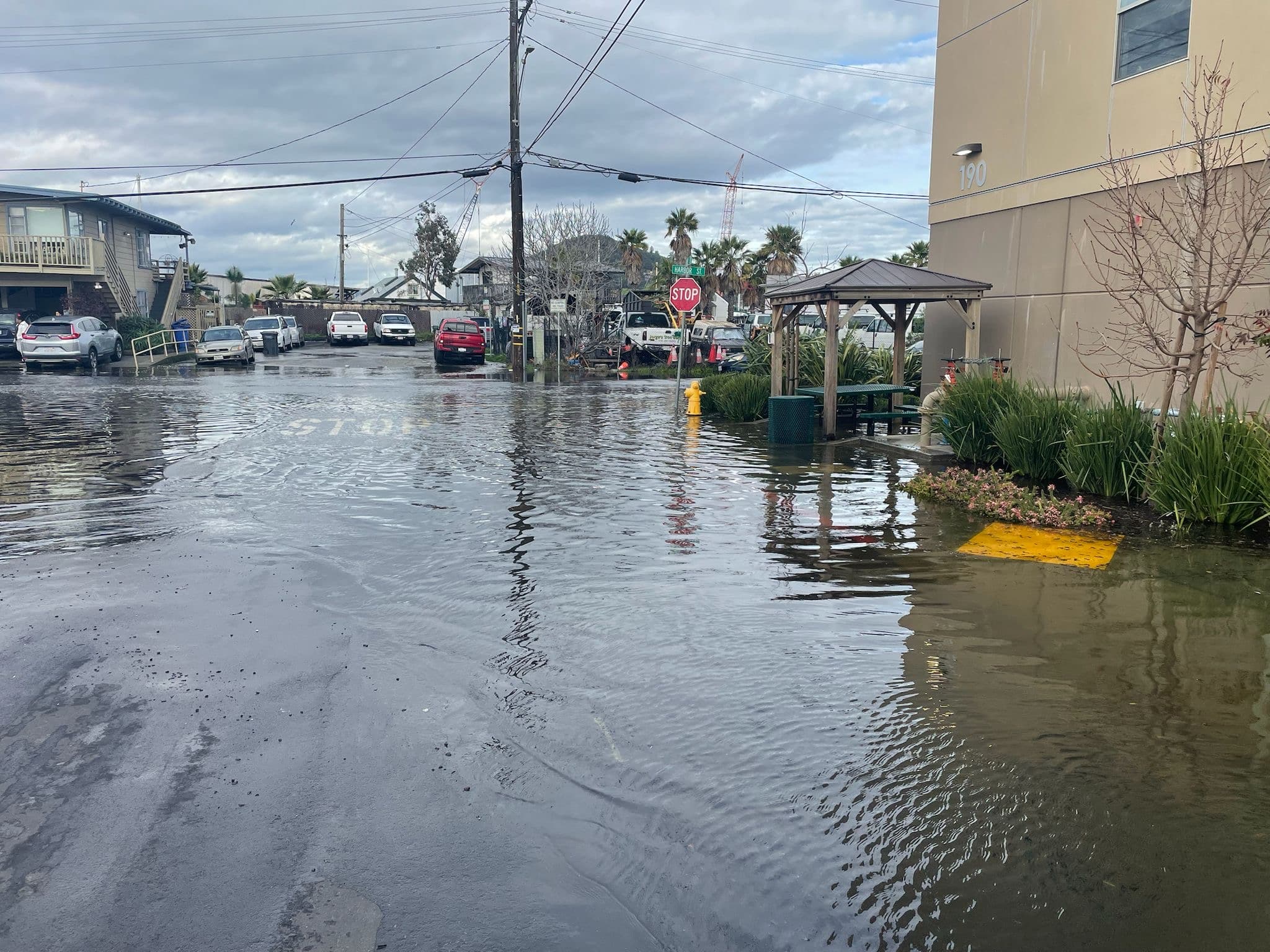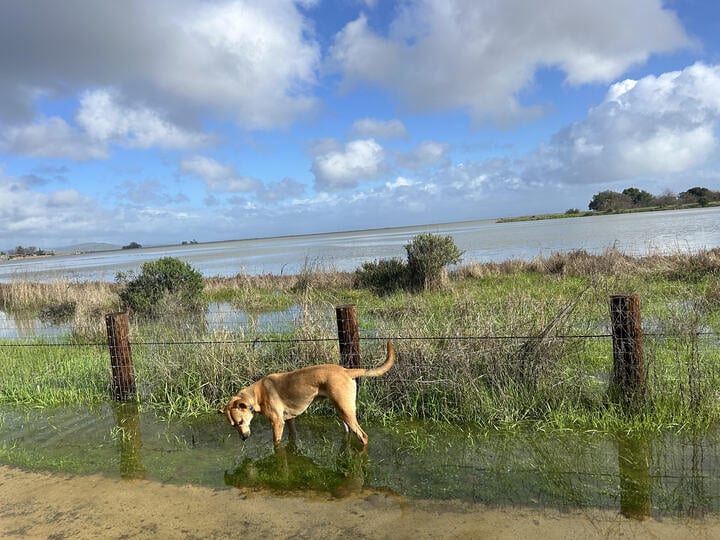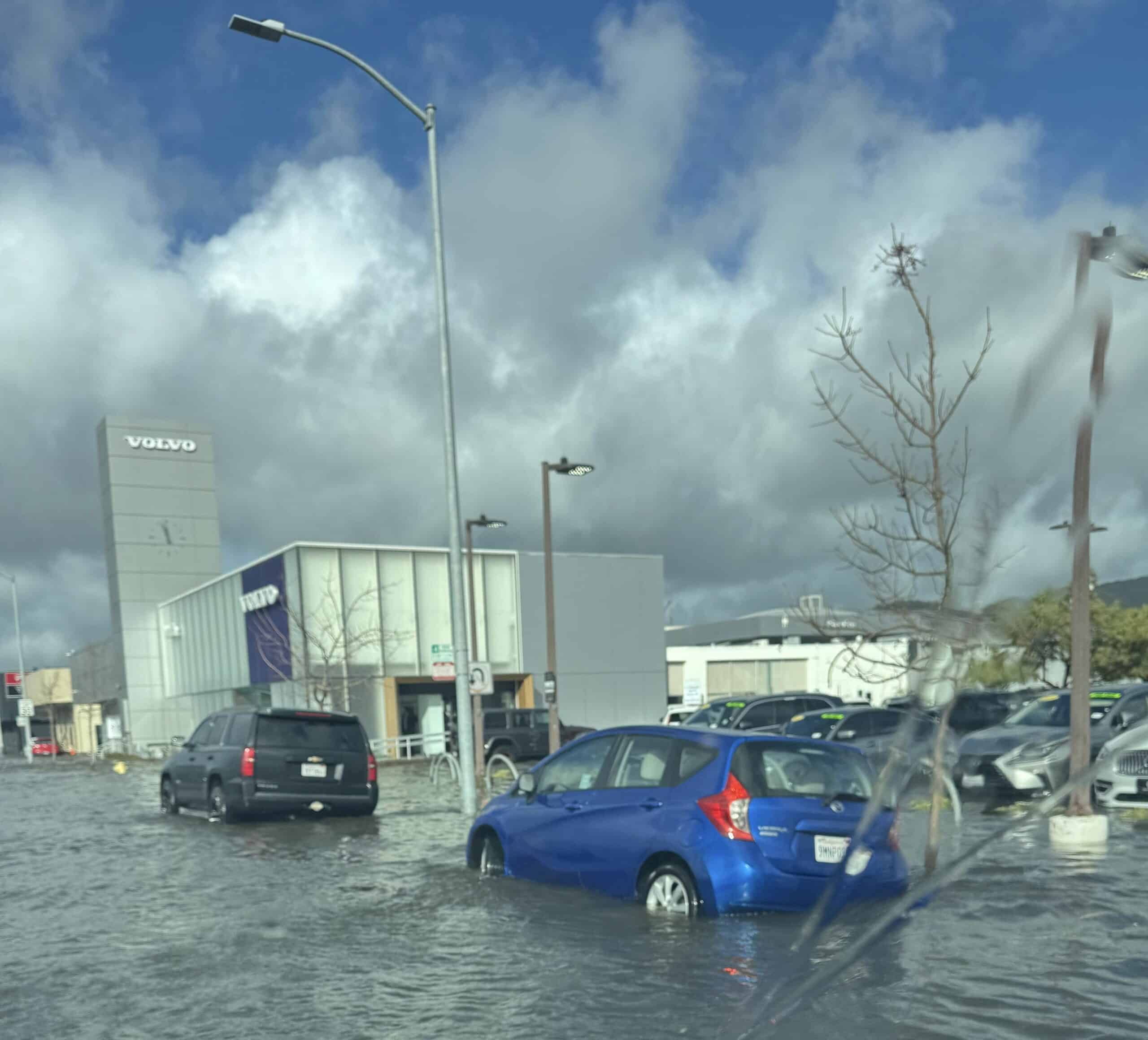
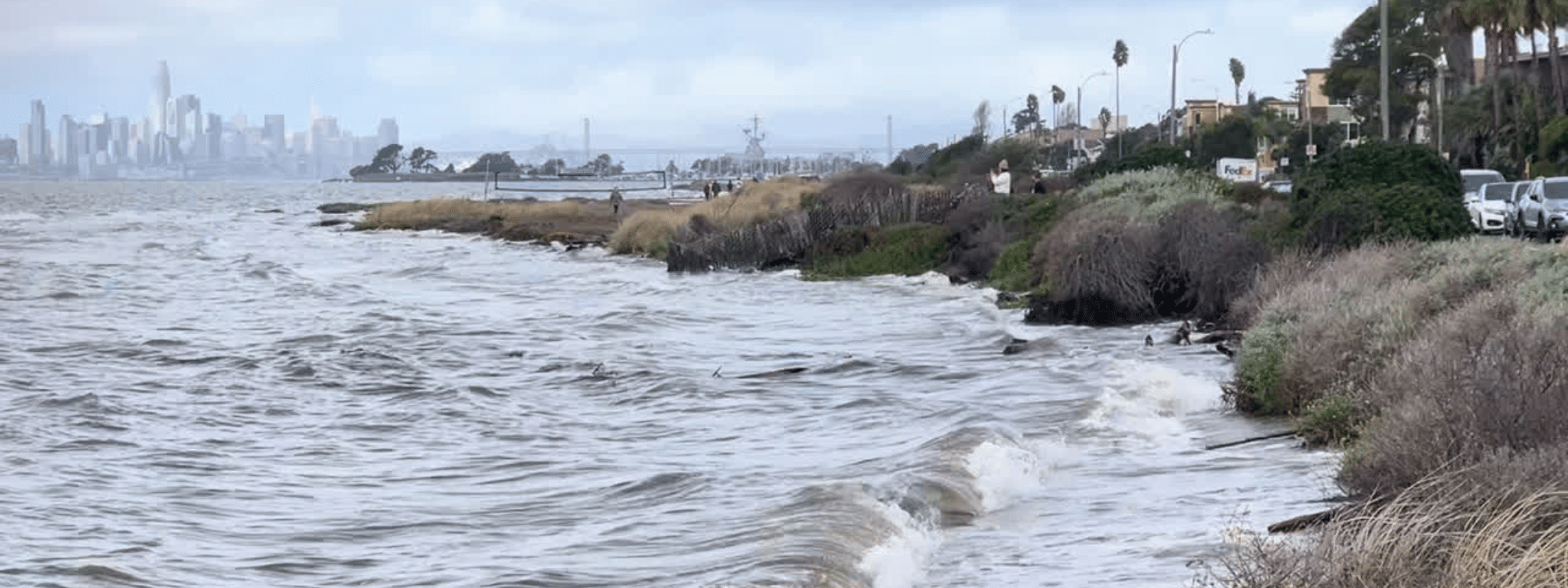
As heavy rainfall combined with higher King Tides, the first days of January saw historic flooding all over the Bay Area. After the water levels receded, we witnessed firsthand the destruction and impact that higher sea levels and frequent floods have on our communities.
Roads flooded in Marin and Alameda. Shorelines overtopped in Hayward and Redwood City. Ferry terminals overtaken by water in Vallejo. Low-lying neighborhoods are grappling with rising groundwater and standing water.
This is a preview of the future. While many people are familiar with the concept of sea level rise, king tides are a helpful way to raise the issue, making it much more tangible than a faraway climate threat."
Zoe Siegel, Senior Director of Climate Resilience, to the Alameda Post
When the naturally occurring King Tides phenomenon stacks on top of higher baseline sea levels, aging infrastructure, and more intense storms, they become something else entirely: a preview of the flooding conditions we can expect far more often in the coming decades.
For many residents, this isn’t an abstract future scenario anymore. The extreme weather events from the first days of January reinforced the need to prepare for more frequent and destructive climate-change-fueled events, and the adaptation efforts must ramp up now.
And, the cost of such damage gets higher every year. The Metropolitan Transportation Council’s Plan Bay Area 2050+ estimates that the cost to adapt hundreds of miles of Bay Area shoreline to protect against the harms of sea level rise will cost $96 billion, and we face a nearly $90 billion funding gap that must be addressed through regional coordination.
For our communities, livelihoods, and ecosystems, we can’t afford to wait any longer for adaptation.
Community-Driven Adaptation
The recent floods put things in perspective: the Bay Area’s infrastructure was built for a climate that no longer exists.
Additionally, the risks and impacts aren’t experienced evenly; it hits hardest on frontline communities, renters, immigrants, low-income households, and communities of color. And the impacts aren’t just physical, such as flooded roads and damaged buildings. They’re social: disrupted commutes, missed work, kids unable to get to school, people cut off from healthcare and safety.
That’s why adaptation can’t be only about seawalls and pumps. It has to be about people, neighborhoods, and systems, and how we build resilience together.
For Greenbelt Alliance, adaptation efforts should be:
- Community-led: People closest to the impacts should shape the solutions.
- Equity-centered: Prioritize communities that face the highest risks and have the fewest resources to recover.
- Integrated: Flood protection, housing stability, public health, transportation, ecosystems, and economic security are all connected.
- Proactive: Waiting until flooding is catastrophic is the most expensive and unjust option.
Coordinated Efforts Happening On The Ground
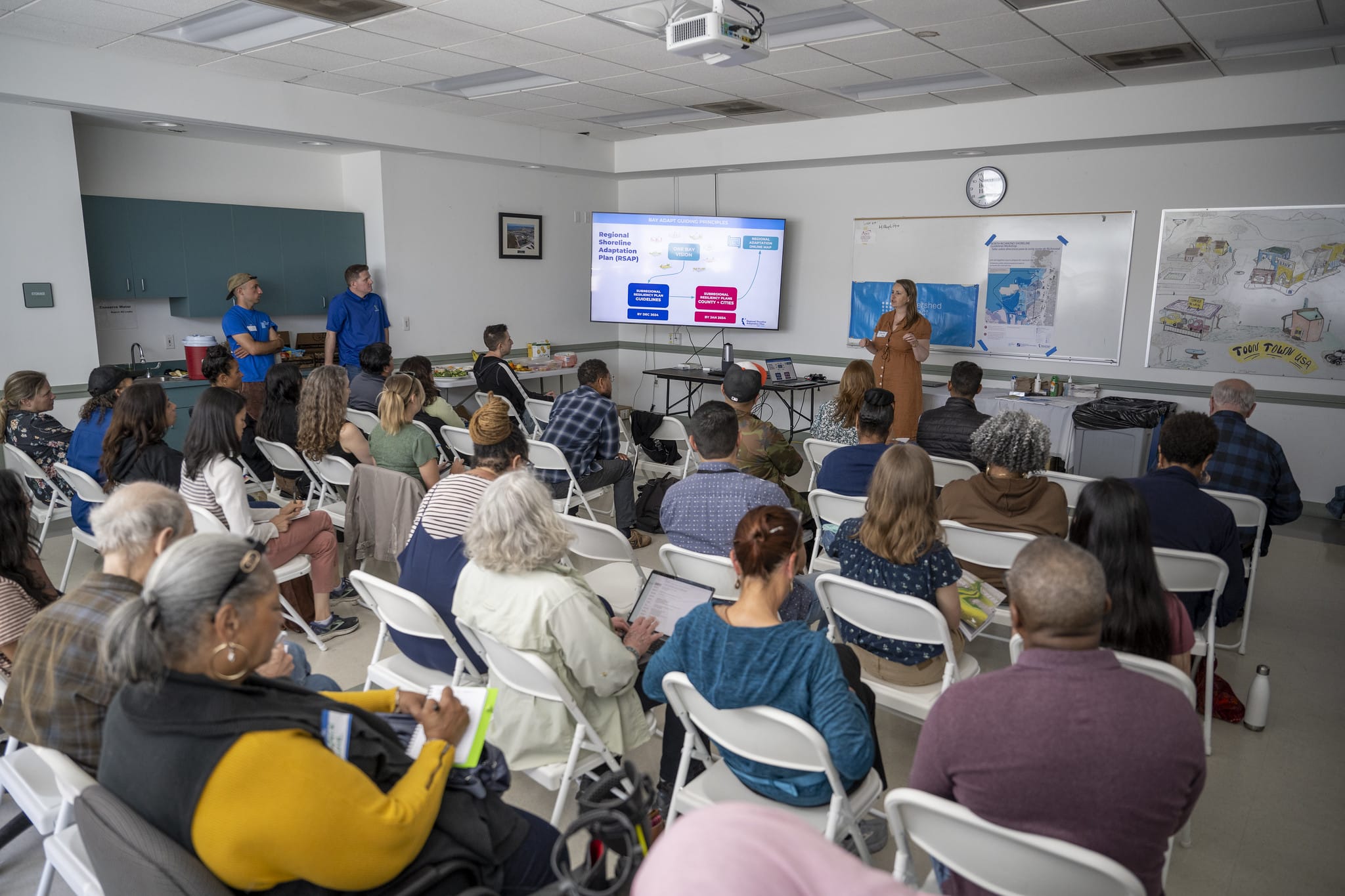
The Bay Area is not approaching climate adaptation in isolation. Through the Bay Adapt Regional Strategy for a Rising Bay, the Resilient SR37 Project, and the Regional Shoreline Adaptation Planning (RSAP) process, mandated after SB 272 was enacted, dozens of cities, agencies, and community-based organizations are aligning around coordinated, nature-based solutions to protect people, ecosystems, and infrastructure.
Greenbelt Alliance works closely with the Bay Conservation and Development Commission (BCDC) and regional partners to advance a coordinated, equitable approach to shoreline adaptation across the Bay Area. Through supporting BCDC’s Bay Adapt and related planning efforts, we help elevate community perspectives, align local projects with regional science and policy, and support the development of shared frameworks that guide climate adaptation investments toward equity, resilience, and long-term public benefit.
And while efforts like Bay Adapt are essential for setting shared direction and standards, they are only as strong as the realities they are built on. To help close the gap between regional planning and lived experience, Greenbelt Alliance is working with community-based organizations across the region and academic researchers at UC Berkeley and UC Davis to document how sea level rise is already affecting people and places, while improving the models and visualizations that decision-makers rely on.
Here’s what that looks like on the ground:
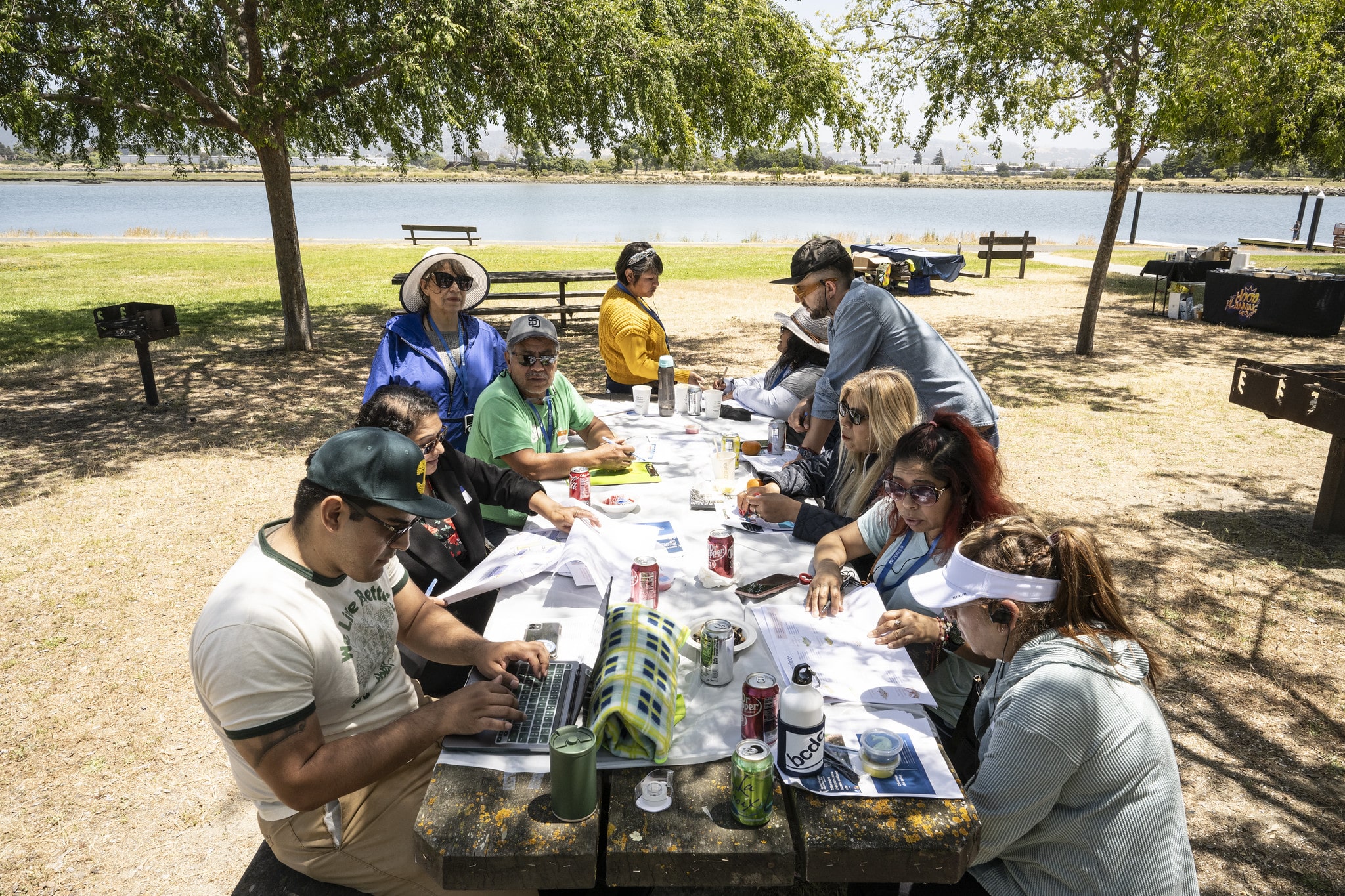
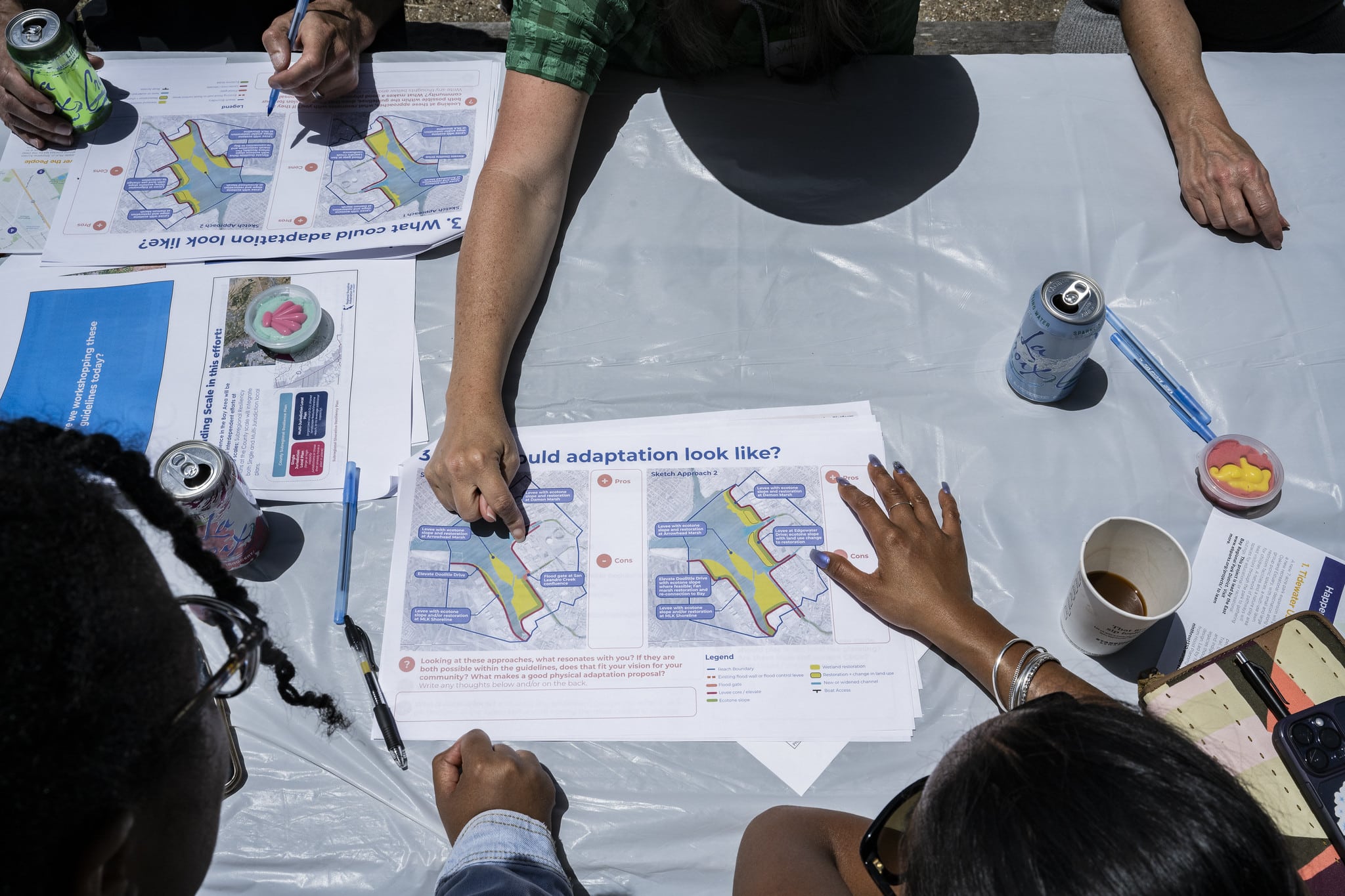
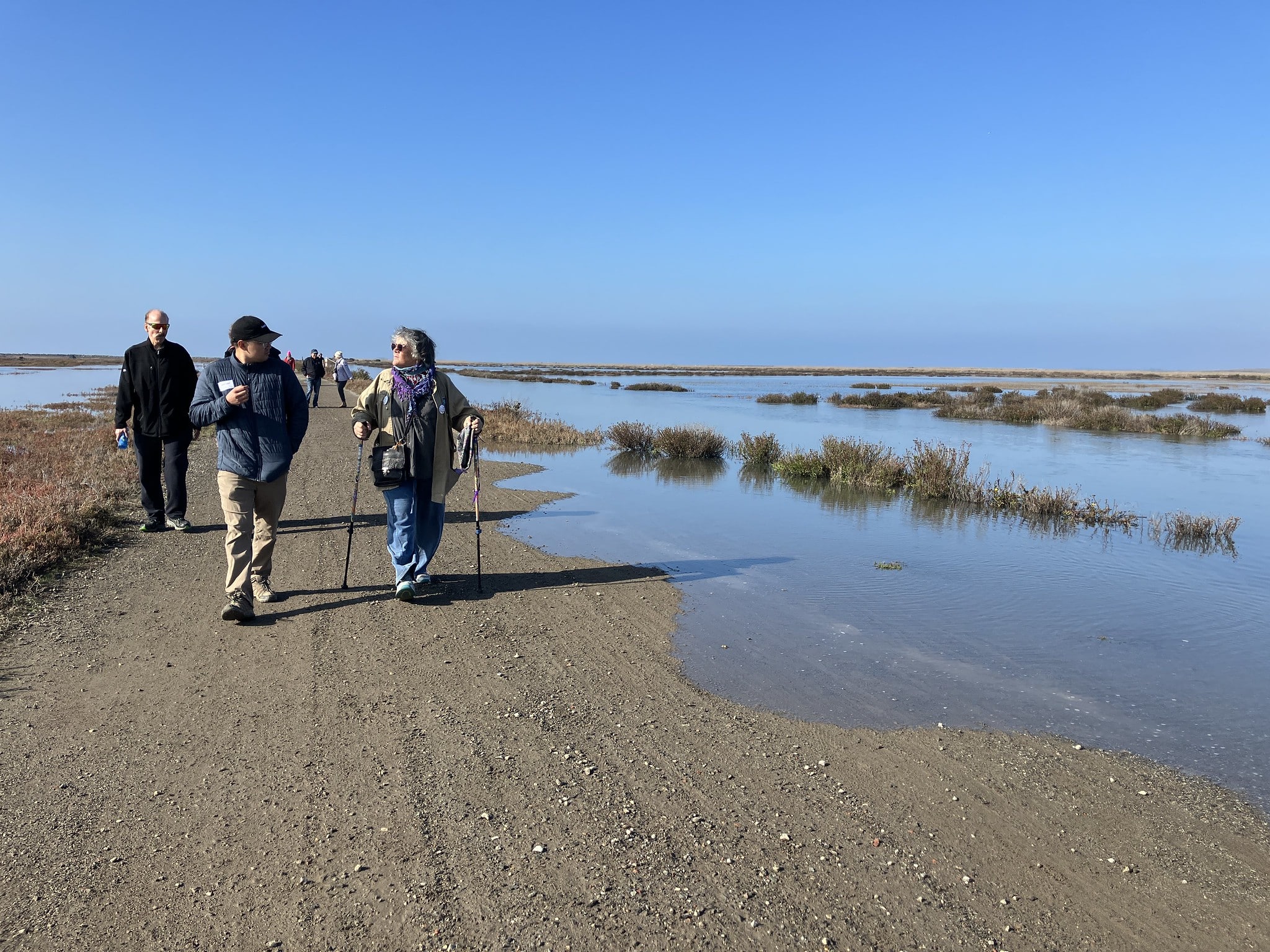
Since 2023, we’ve been working with the City of Alameda—and leaders such as Resilience Manager Danielle Mieler—to lead community engagement across Alameda and Oakland. We lead the community partner team of the Oakland-Alameda Adaptation Committee (OAAC) and related efforts to coordinate shoreline adaptation across city boundaries, center frontline communities, and ensure that adaptation investments reduce, not deepen existing inequities. This includes community-led engagement, shoreline tours during King Tides, and planning for nature-based and hybrid solutions that protect both people and ecosystems.
We have recently begun working with the Port of Oakland on the Climate Adaptation Planning for Oakland’s Frontline Communities (CAPOFC) project, which is preparing Oakland’s shoreline for the future. Led by the Port of Oakland in partnership with the City of Oakland, this effort will assess projected future sea level rise (SLR) and groundwater intrusion (GWI), develop and prioritize adaptation strategies, and identify potential funding sources to strengthen climate resilience for the Port, the City, and nearby shoreline communities.
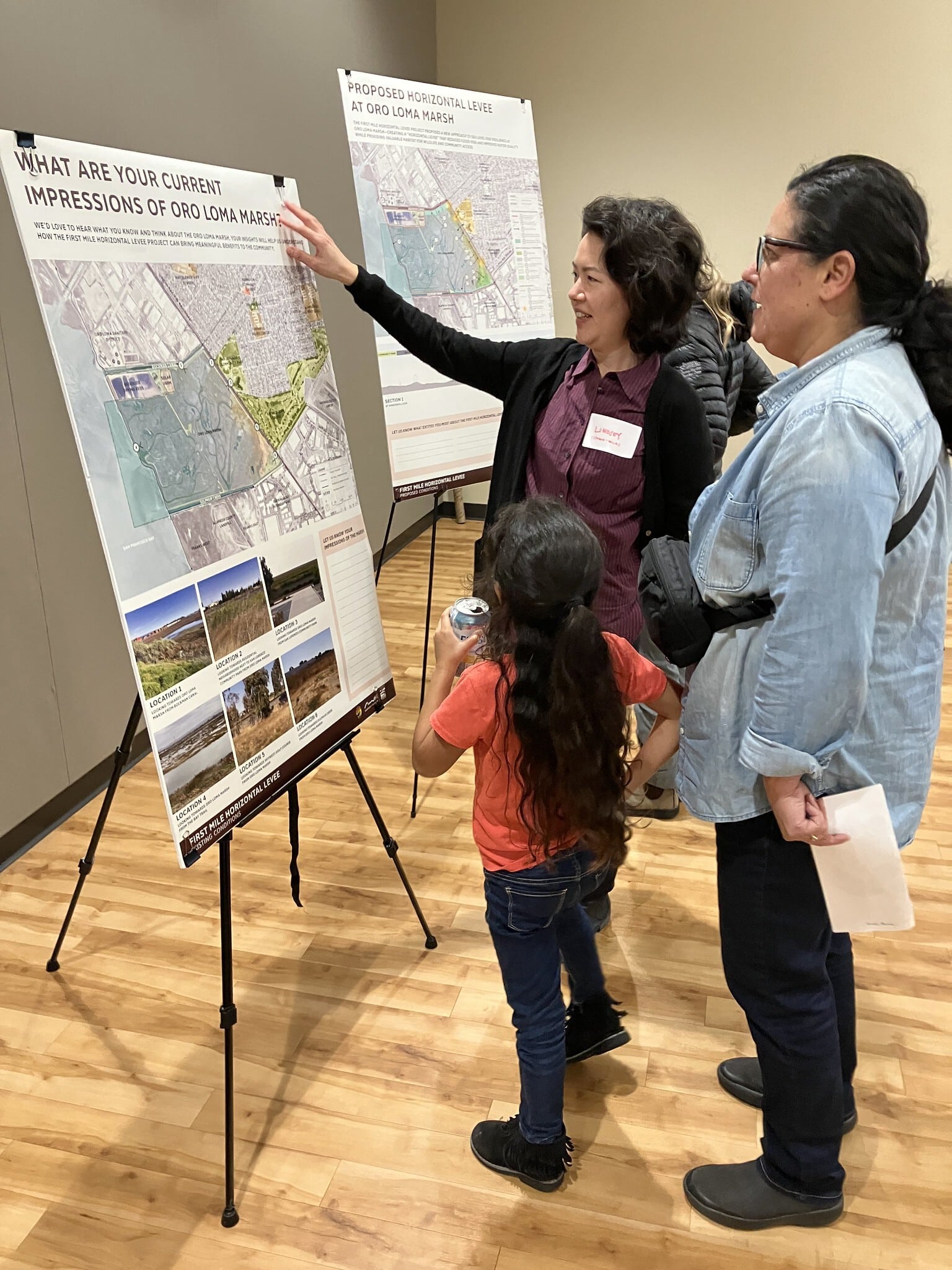
We’re working with the Hayward Area Shoreline Planning Agency, San Francisco Estuary Partnership, East Bay Dischargers Authority, East Bay Parks, City of Hayward, regional agencies, and community partners to advance three interconnected shoreline adaptation efforts that protect neighborhoods, infrastructure, and ecosystems from sea level rise. This includes the Hayward Shoreline “First Mile” project focused on near-term flood protection and access, a horizontal levee and nature-based solutions project that restores wetlands while reducing flood risk, and a longer-term shoreline adaptation planning effort that integrates climate science, land use, and community priorities. Together, these projects demonstrate how layered, place-based solutions can reduce flood risk today while building a more resilient and ecologically healthy shoreline for the future. Check out the recap of our first community. event.
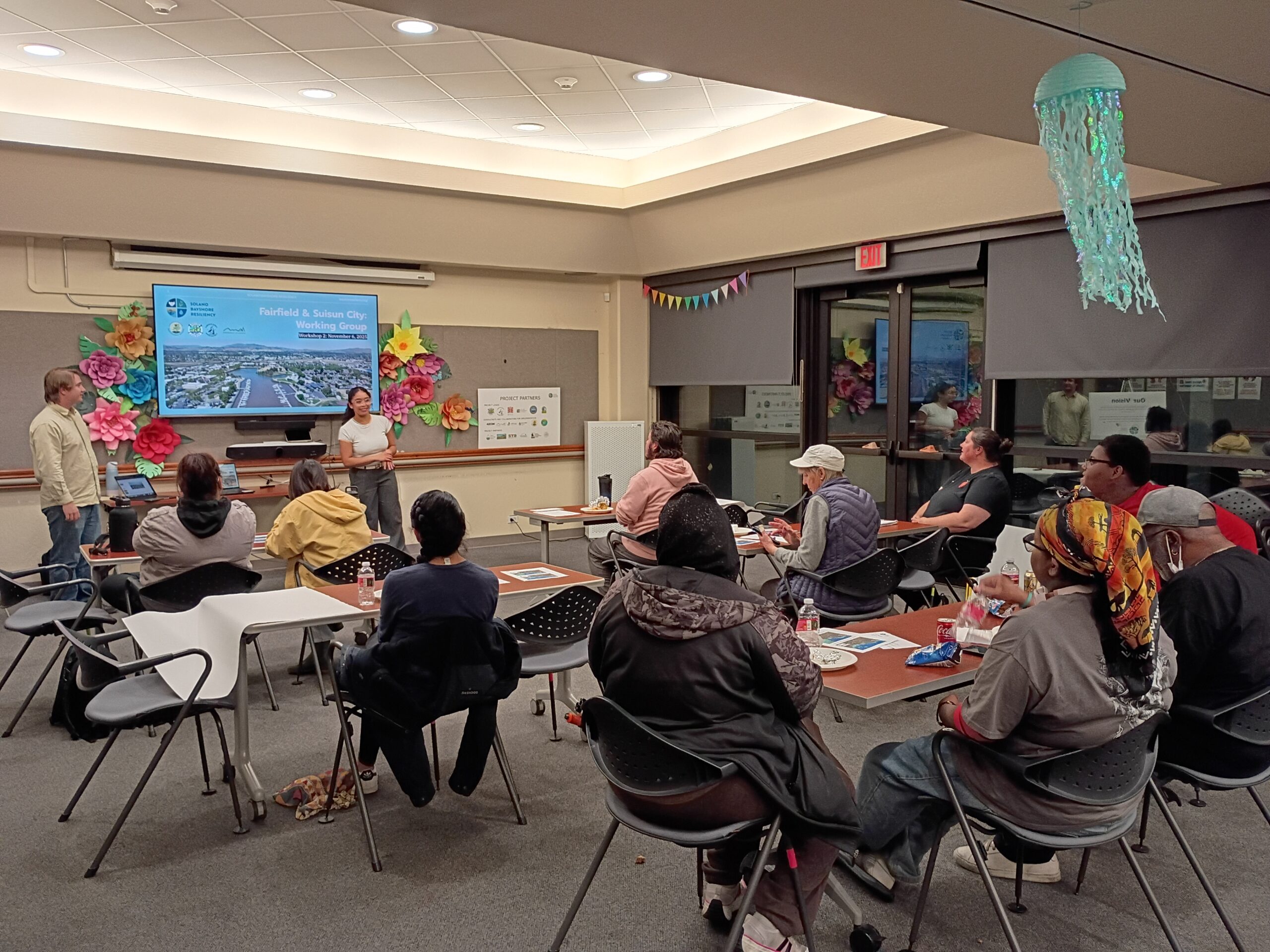
We are working to build a strong foundation for countywide sea level rise adaptation through the Solano Bayshore Resilience project, currently funded by the Office of Land Use and Climate Innovation (LCI) and Ocean Protection Council (OPC). Through engaging community members and partner jurisdictions, conducting a vulnerability assessment, and identifying projects for implementation, this two-year project will help prepare local jurisdictions to deliver adaptive infrastructure that has been designed through a thoughtful community process. Greenbelt Alliance first identified Suisun City as a Resilience Hotspot in 2023 and is proud to partner with public agencies and local community organizations to secure funds for this critical planning work that includes groundwater rise analyses, community working groups, youth educational programming, and more.
We are honored to be a part of the Marin Climate Justice Collaborative, a coalition of community-based organizations, advocates, and residents working to ensure that climate action in Marin County centers equity, inclusion, and the needs of frontline communities. The Collaborative focuses on elevating community voices, building shared understanding of climate risks and solutions, and advancing policies and investments that address both environmental and social justice, recognizing that climate impacts and benefits are not distributed equally.
The recent devastation from flooding clearly showed that billion-dollar climate impacts are not a distant threat; it’s a present reality. However, it’s also a reminder that we’re not powerless. Across the Bay Area, communities are organizing, agencies are collaborating in new ways, and solutions are emerging that are smarter, more just, and more resilient than what we’ve built before.
We’re committed to standing alongside those efforts, translating science into action, elevating community voices, and helping turn moments like this into lasting change.
As the water continues to rise, our adaptation efforts will rise together for resilience!