
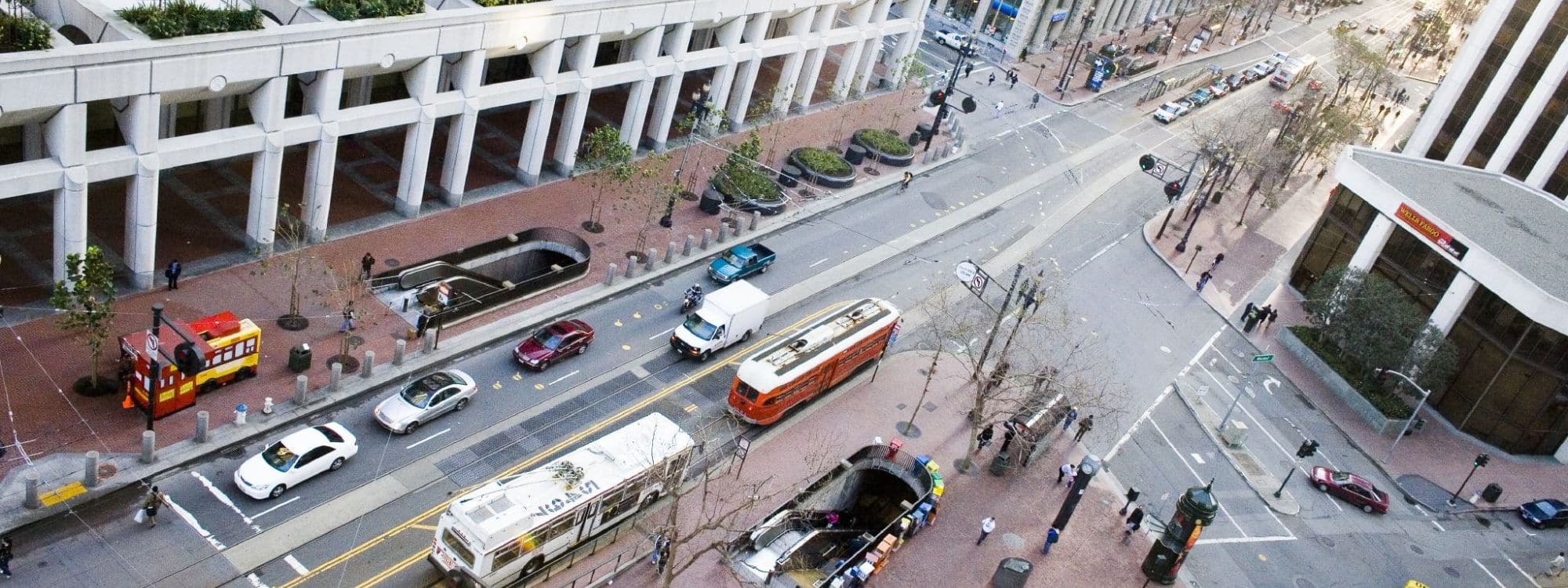

As a cornerstone of Greenbelt Alliance’s climate and housing work, transit-oriented development (TOD) policies are central to creating more affordable and resilient communities. It is a tool that has strengthened the Bay Area against climate risks while promoting more walkable, vibrant, and accessible neighborhoods.
TOD is also the reason why Greenbelt Alliance advocated for the passage of the Metropolitan Transportation Commission’s (MTC) Transit-Oriented Communities (TOC) Incentive Program in 2022, which outlines their vision of centering housing, workplaces, and businesses around public transit. However, in the fall of 2025, this policy was at risk of being dramatically weakened by a new partial-credit scheme that rewards progress, not results.
That’s why the recent approval of this policy at the February 25 MTC meeting was a decisive win for our region. The TOC policy evaluation framework reiterated that if cities meet objective criteria for housing, density, parking, and station access, they would be slated to receive funding from the $45 million set-aside in the One Bay Area Grant 4 (OBAG 4) program. This, among other agreements in the evaluation framework, will likely allow for 10-15 cities of varying sizes to benefit from the funding pool to further their planning and capital projects, especially at a time of financial uncertainty.
Hard-Won Regional Agreement
MTC Commissioners disagreed on the funding mechanism and which cities would qualify, but thanks to Commissioners Noelia Corzo, Belia Ramos, and Victoria Fleming, our goals prevailed. Working alongside a coalition of dedicated advocates, Greenbelt Alliance successfully argued for a robust evaluation framework that rewards cities for achieving TOC policy criteria.
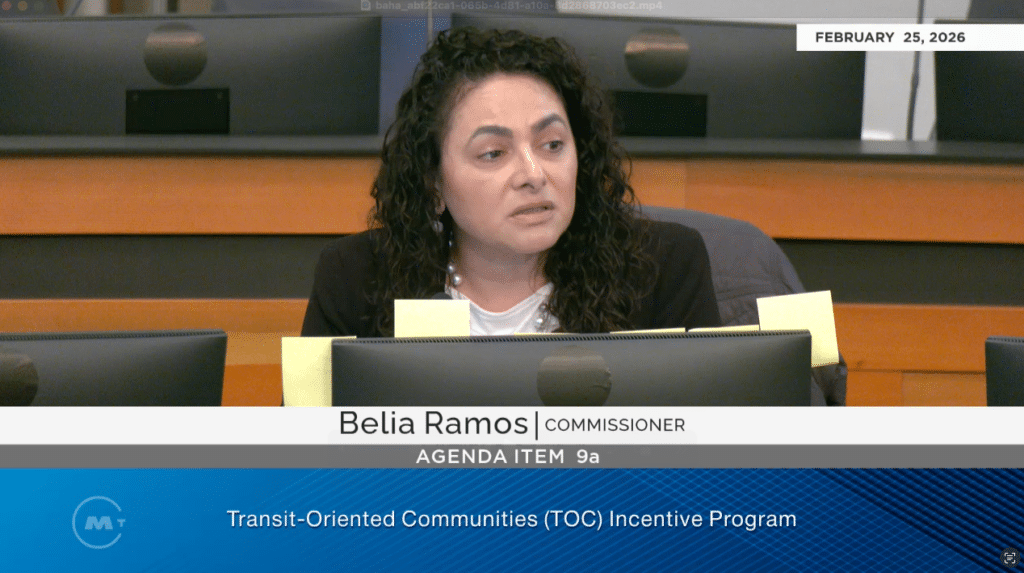
“If you are a landlord, and you decide to provide organically and inherently affordable housing, you may continue to do so…” explained Commissioner Ramos. “I’m the daughter of a farm worker–and our rent was just a couple of hundred dollars a month. I’m incredibly grateful for the people who have the goodwill to do that. And some people need some of our $45 million to find that goodwill.”
TOC is an essential policy and fits well into the larger cadre of new housing and environmental laws soon coming into effect. For example, TOC areas subject to SB 79 will automatically meet the density criterion since the new law’s density requirements are at or greater than TOC requirements. The framework also highlights the importance of housing protections by requiring cities to adopt at least two of eleven policies—like just-cause eviction, rent stabilization, or fair housing enforcement—in order to meet additional housing criteria.
“It’s my sincere hope that across 101 cities and nine counties in the Bay Area that some of these policies will be implemented,” Commissioner Fleming urged on the importance of the housing protections criteria in the staff recommendations. “It will have a rippling equity [effect] of making housing in the Bay Area more affordable, accessible, and stable for our most vulnerable communities.”
Transit Underpins Climate Policy
All of these new rules culminate in a robust policy evaluation framework that rewards cities for creating more transit-oriented communities. Through their decision, MTC demonstrated the strength of regionalism and the impact of city and county coordination throughout the Bay Area. Greenbelt Alliance hopes that TOC will become a key driver in supporting thriving communities that further our climate SMART goals. When we build new homes in existing communities near jobs and transit, we are encouraging a more resilient and affordable future while keeping development away from our farms and open spaces.
Finally, it reminds us that much of our climate and housing goals are underpinned by a successful public transit system. Today, that system and any TOC policy stand at risk due to a fiscal cliff slated to reduce train and bus frequencies and hours of operation. Take action now to support BART, Muni, Caltrain, and AC Transit by signing the petition to Connect Bay Area.